What To Check Before Choosing A Home Charging Routine For An Electric Car Without Overcomplicating It
A practical step-by-step guide to what to check before choosing a home charging routine for an electric car without overcomplicating it, including preparation, instructions, common issues, tips, and next steps.
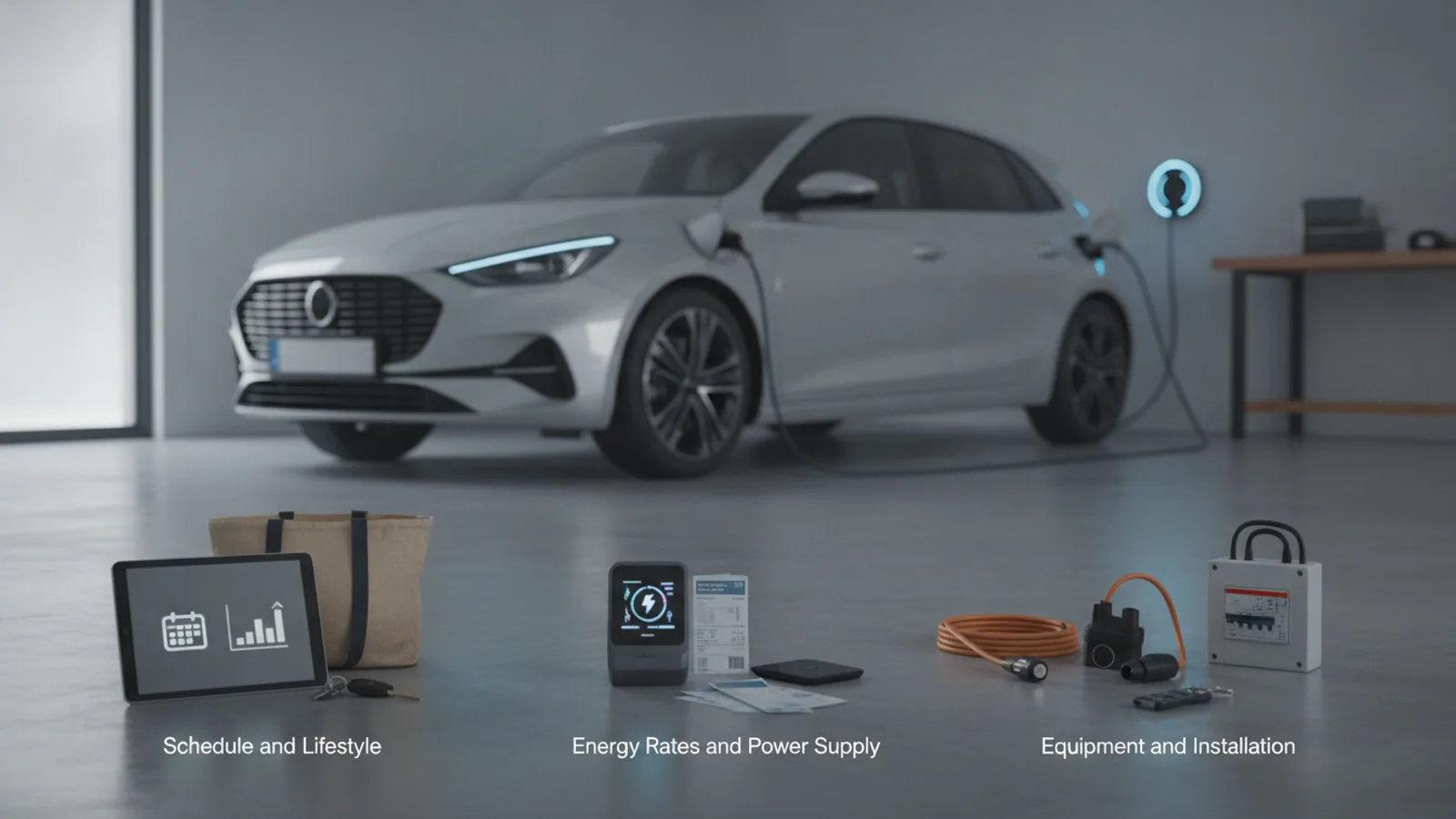
What To Check Before Choosing A Home Charging Routine For An Electric Car Without Overcomplicating It
Choosing a home charging routine for an electric car can feel confusing, but it doesn't have to be. This guide walks you through the key checks without technical jargon, helping you set up a simple, cost-effective, and convenient charging habit. You'll learn what to look for in your electrical setup, how to use off-peak rates wisely, and how to balance battery health with daily driving needs. The focus is on practical steps that work for typical homes, with clear warnings about safety and common pitfalls. By the end, you'll have a routine that fits your life and avoids unnecessary complexity.
Fast Answer
- Check your home's electrical capacity and the type of outlet near your parking spot—this determines if you can charge overnight safely and how fast.
- Set a schedule that uses cheaper electricity if available, and keep the battery between 20% and 80% for daily use to extend its life.
Before You Start
- Look at your electrical panel to see if you have spare capacity, typically 40 to 50 amps, for a dedicated circuit. If unsure, consult an electrician.
- Identify the outlet you'll use: a standard household outlet (120V) is slow but sufficient for overnight top-ups, while a 240V outlet is faster and recommended for daily heavy use.
- Find your electric utility's rate plan—many offer lower rates at night. Check if they require a separate meter or a scheduled rate window.
- Estimate your daily driving distance and typical energy use per mile, which you can find in your car's dashboard or owner manual, to determine how much charging you need.
Step-by-Step Instructions
Check Your Home Electrical System
Start by inspecting your electrical panel to understand its capacity. Most homes have 100 or 200 amp service. Charging an electric car at night uses about the same power as a large appliance like a dryer, so you need to know if there's spare capacity. Look for unused breaker slots, which indicate room to add a new circuit. If the panel is full or you have an older home with limited power, you might need a service upgrade, which is a job for an electrician. This check matters because overloading your panel can cause breakers to trip frequently or create a safety hazard. You can also ask your utility about a load study, but a visual check is a good first step. If you see any rust, burn marks, or a very old panel, call a professional before proceeding.
Choose the Right Outlet for Your Needs
Decide which type of outlet you'll use for charging. A standard 120-volt household outlet is common and requires no setup, but it delivers power slowly—adding about 3 to 5 miles of range per hour of charging. That's fine for plug-in hybrids or low-mileage days, but not for a fully electric car if you drive a lot. A 240-volt outlet, similar to what a dryer or stove uses, charges up to five times faster. You'll likely need electrician installation if you don't have one already. To choose, calculate roughly how many miles you drive per day and divide by the miles per hour your outlet provides. For most people, a 240-volt outlet makes sense because it's flexible and saves time. Even if you can't install one immediately, knowing your outlet's capability shapes your routine.
Understand Your Electricity Rate Plan
Contact your electric utility to learn how you're billed for electricity. Many providers offer time-of-use (TOU) rates, where electricity costs less during off-peak hours, typically overnight. Some plans have a fixed rate all day, but they might not be optimal for electric car owners. Ask if they have a specific EV rate, a separate meter, or a program that gives you a lower rate for charging during certain windows. This information is crucial because it directly affects your monthly cost. If you have a TOU plan, you can save significantly by scheduling charging only during low-rate periods. Also, check if your utility offers a demand charge, which penalizes high power use at any instant—that might affect how you charge. Write down your plan's details and compare it with your driving habits to see if a different plan would be cheaper.
Set a Simple Charging Schedule
Using the information from your rate plan, create a daily charging schedule. Most EV chargers or your car's settings allow you to set start and end times. A typical routine is to plug in when you get home, but set the charger to start at the beginning of off-peak hours, often around 9 or 10 PM. This avoids high rates during the evening when people are using more power. You can also use the 'charge by departure' feature, where you set the time you leave in the morning, and the car figures out when to start so it's ready without overcharging. The benefit here is twofold: you save money and reduce stress on the grid. Even if your utility has a flat rate, scheduling can still help you avoid peak demand periods if your utility offers any incentives. Keep it simple—set it once and forget it.
Monitor Battery Limits and Health
For daily driving, it's best to keep your battery between 20% and 80% charged. This range minimizes stress on the lithium-ion cells and extends the battery's lifespan. Check your car's manual to see if it has a setting to limit the maximum charge level—many cars let you set a target percentage. If you have a daily commute that uses most of the battery, you might need a full 100% charge, but that's fine as long as you drive soon after. However, if you only drive short distances, avoid charging to 100% every night. This check matters because batteries degrade faster when held at full charge for long periods, especially in extreme temperatures. Also, avoid letting it drop below 10% regularly. Your car's display or app usually shows your current charge and estimated range, so you can adjust your routine accordingly.
Review and Adjust Your Routine Monthly
Think of your charging routine as something you refine over time. Once a month, look at your driving patterns and any changes in your schedule. Are you working from home more? Did you take a trip that required more energy? Use your car's trip log or app to see average efficiency. Also, check your utility bill to see if your charging time aligns with low rates. If you notice you're often charging during peak hours, adjust your schedule. It's also wise to watch for any error messages or strange behavior from the charger. This review helps you catch small problems early, like a loose connection or a faulty charge timer. Remember, the goal is simplicity—if your routine is working, don't over-optimize. But a quick monthly check ensures you're still saving money and not harmful to the battery.
Quick Reference
| Situation | Action | Why it helps |
|---|---|---|
| You have a short daily commute of under 30 miles and a standard 120V outlet. | Plug in every night using the standard outlet; no need to buy extra equipment. Set the car's limit to 80% if possible. | The slow charging rate is adequate because you're not asking for a lot of range overnight, and keeping it at 80% is best for battery health. |
| You drive over 50 miles a day and can install a 240V outlet. | Hire an electrician to install a dedicated 240V circuit, then use a level 2 charger or the one that came with your car. Set charging to off-peak hours if your rate plan has them. | This setup delivers enough range overnight to cover your daily distance without running the battery to empty, and using off-peak rates cuts your energy cost. |
| You have a time-of-use rate with lower prices overnight but no off-peak schedule set. | Open your car's app or charger settings and schedule charging to start at the beginning of off-peak hours, typically 9 PM or later. program it to stop at your departure time. | This ensures you're pulling electricity only when it's cheapest, saving you money every month with minimal effort. |
Common Issues
- The charger keeps tripping the breaker after a few minutes.: Unplug the charger and inspect the outlet for burns or melting. If it looks fine, try charging at a lower amperage setting if your charger allows it. If the problem persists, call an electrician to check the circuit's wiring and capacity.
- Your car doesn't reach the target charge level overnight.: Check the charging start time—it might be set too late or the session got interrupted. Also confirm the outlet is delivering power by testing with a different device. If using a timer, make sure it's rated for the load. You may need to adjust your schedule to start earlier.
- You're seeing higher electricity bills despite charging at night.: Compare your bill to the previous month to see if you used more electricity. Also, verify that your car is actually charging during off-peak hours—check the charging log. If you have a separate meter for charging, ensure it's connected correctly. If not, you might be charging at a higher rate due to a plan change.
Advanced Tips
- Use your car's departure timer to let the battery charge during off-peak hours and finish just as you leave, which can reduce battery heating in cold weather.
- If you have solar panels, consider charging during daylight hours when you're producing power, even if that means adjusting your rate plan to match.
- Some utilities offer a rewards program for shifting charging to certain times—enroll if available, but always confirm the details don't conflict with your schedule.
Final Checklist
- I've checked my electrical panel and know its capacity, and I've consulted an electrician if needed.
- I've chosen a suitable outlet (120V or 240V) based on my daily driving needs and installation options.
- I've reviewed my utility's rate plan and scheduled charging during off-peak hours if offered.
- I've set a charge limit of 80% for daily use and reviewed my routine monthly.
FAQ
How long does it take to charge an electric car at home?
It depends on the outlet and your car's battery size. A standard 120V outlet adds about 3-5 miles of range per hour, so an overnight charge of 10 hours gives you 30-50 miles. A 240V outlet adds 25-30 miles per hour, so a 7-8 hour charge can cover 175-240 miles, which is plenty for most daily needs.
Should I charge my EV to 100% every night?
Not every night. For daily driving, keeping the battery between 20% and 80% is best for battery longevity. Charge to 100% only when you need the full range for a long trip, and plan to drive soon after to avoid the battery sitting at full charge for long periods. Your car's manual may have specific recommendations.
Can I use a regular extension cord to plug in my car?
It's not recommended. Extension cords are not rated for continuous high current and can overheat, causing a fire hazard. Always plug directly into a wall outlet that is rated for the charger's amperage. If you must use an extension cord temporarily, it should be a heavy-duty cord rated for 15 amps or more, but it's better to avoid it.