Common Mistakes When Setting Up A Home Charging Routine For An Electric Car Without Overcomplicating It
A practical step-by-step guide to common mistakes when setting up a home charging routine for an electric car without overcomplicating it, including preparation, instructions, common issues, tips, and next steps.
Common Mistakes When Setting Up A Home Charging Routine For An Electric Car Without Overcomplicating It
Setting up a home charging routine for an electric car can feel complicated, but it doesn't have to be. Many owners make avoidable mistakes that lead to inconvenience, wasted energy, or unnecessary strain on their vehicle's battery. This guide walks you through the most common pitfalls and shows you how to create a simple, effective routine. You'll learn how to prepare your home setup, avoid the classic errors, and optimize your charging habits for everyday life. By following these straightforward steps, you'll keep your car ready when you need it without overthinking the process. The goal is to make charging as easy as plugging in your phone, so you can enjoy the benefits of electric driving without the stress.
Fast Answer
- Plug in whenever you can, not just when the battery is low, to keep the battery healthier and always have enough range for unexpected trips.
- Set a daily reminder or use your car's scheduling feature to charge during off-peak hours, which can save money and reduce strain on the grid.
Before You Start
- Check your home's electrical panel to see if you have enough capacity for an EV charger; consult an electrician if unsure.
- Decide whether you'll use a standard household outlet or install a dedicated charging station, based on your daily driving needs.
- Identify the location where you'll park and charge, ensuring the cable can reach comfortably without stretching or creating a trip hazard.
- Download and review your car's charging features, such as scheduled charging, so you can set up a routine that fits your lifestyle.
Step-by-Step Instructions
Choose the Right Charging Equipment
Start by selecting the charging equipment that matches your needs. For occasional drivers, a standard 120-volt outlet might be enough, but it adds only a few miles of range per hour. If you drive more than 40 miles a day, a dedicated 240-volt charger is a better investment. Check your car's manual for its maximum charging rate and make sure the equipment supports that. Also, consider the cord length and whether you'll need an outdoor-rated unit if you park outside. Once you pick a charger, have it installed by a qualified electrician who can verify the circuit is adequate. After installation, test the charger with your car to confirm it works. This upfront attention prevents future charging slowdowns or safety issues. A practical check is to monitor your charging speed during the first week to see if it matches the expected rate.
Establish a Consistent Charging Schedule
Set a regular time to plug in your car, just like you would for charging a phone overnight. This habit ensures you start each day with a full battery, reducing range anxiety. Many electric cars allow you to schedule charging start and stop times. If yours does, use it to align with when electricity rates are lower, if your utility offers that. If not, simply make it a routine to plug in when you get home. Consistency also helps you avoid forgetting to charge, which is a common mistake for new EV owners. To make it stick, link charging to another daily activity, such as eating dinner or taking out the trash. A practical check is to set a phone alarm for the first few weeks until the habit becomes automatic. This simple step can greatly improve your ownership experience.
Avoid Charging to 100% Every Day
One of the biggest misconceptions is that you should always charge the battery to full. In fact, most EVs prefer to stay between about 20% and 80% for daily driving. Charging to 100% is okay for road trips, but doing it every day can degrade the battery faster over time. Check your car's owner's manual for its recommended daily charge limit. Many cars let you set a limit, so adjust it to 80% if that suits your routine. This way, you'll have enough range for most days while preserving battery health. If you know you'll need extra range for a long trip, you can raise the limit the night before. A practical check is to look at the battery percentage gauge: if it's already at 80% when you wake up, you're on the right track. This simple habit can save you hundreds of dollars in potential battery replacement costs later.
Keep the Battery Between 20% and 80%
Letting your battery drop below 20% on a regular basis can stress the cells and reduce longevity. Aim to plug in when you hit around 20% rather than waiting until it's nearly empty. Similarly, avoid keeping the battery at 100% for long periods, especially in hot weather. This practice reduces the risk of capacity loss. To make this easier, use your car's range estimation and plan your trips accordingly. If you have a predictable commute, you'll know exactly when to plug in. A practical check is to glance at the battery indicator each morning: if it's below 50% and you didn't charge overnight, make a note to plug in earlier. By maintaining this buffer, you ensure your car is always ready for unexpected detours. It also helps your battery last longer, making your EV more economical in the long run.
Use Scheduled Charging to Save Money
Many utilities offer lower electricity rates during off-peak hours, typically overnight. If your car or charger has a scheduling function, set it to charge during these times. This can significantly reduce your energy costs. First, check your utility's rate plan to see if time-of-use pricing is available. If so, note the off-peak hours and program your car to start charging accordingly. For example, you might set charging to begin at 11 p.m. and finish before 6 a.m. If your car lacks this feature, you can plug in but not turn on the charger until the off-peak period, or use a timer. A practical check is to review your energy bill after a few weeks to see if your usage shifted. This simple step not only saves money but also helps the grid manage demand. Just remember to prioritize your convenience: if you need a quick charge during the day, it's fine to charge on-peak occasionally.
Maintain a Tidy Charging Area
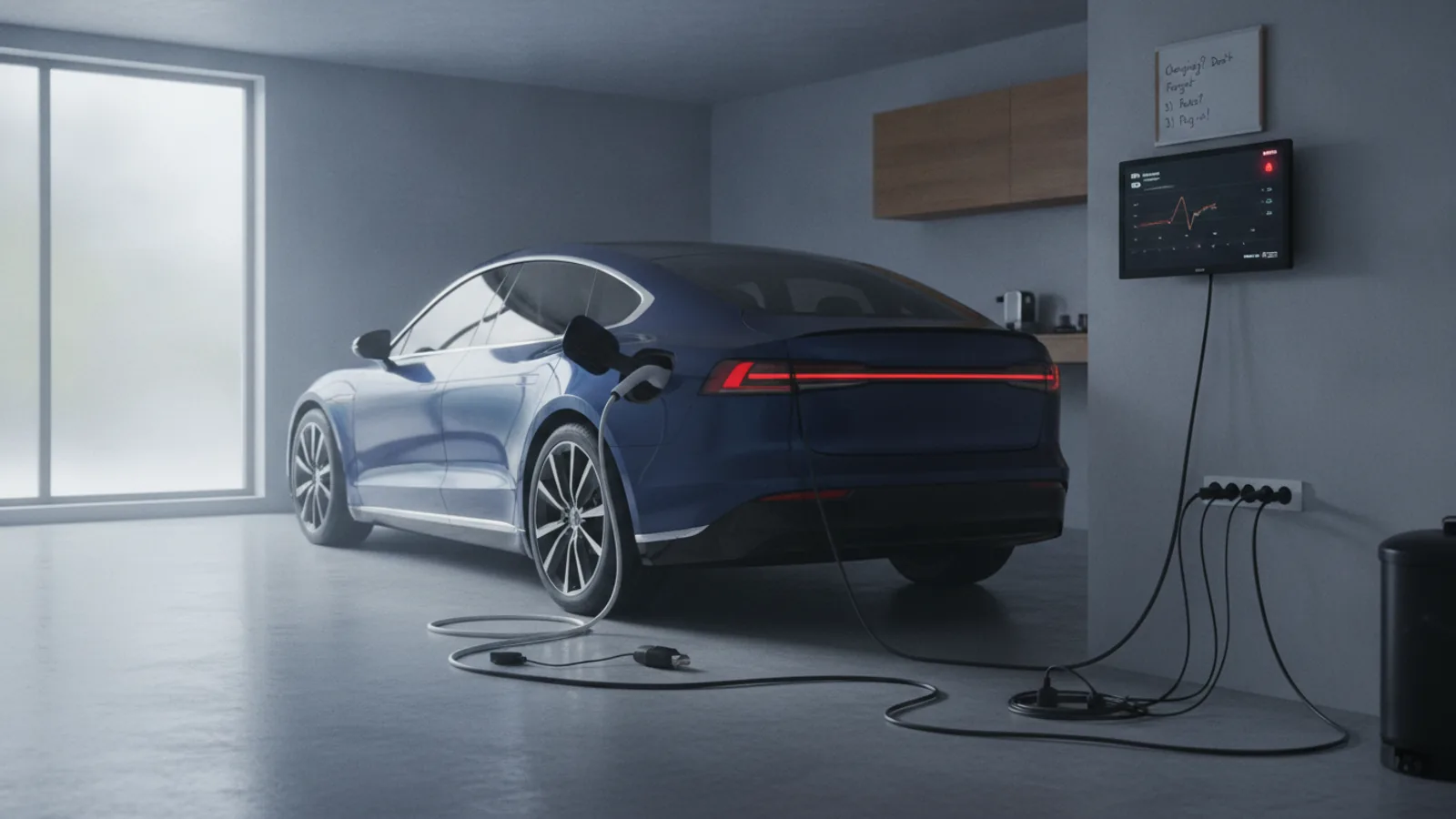
A messy charging area can cause accidents and damage. Keep the cable neatly looped when not in use, and avoid leaving it on the ground where someone could trip. Make sure the area is dry and free of debris. If you charge outdoors, use a weatherproof cover for the outlet and keep the connector clean. Also, inspect the cable and plug regularly for signs of wear, such as cracked insulation or exposed wires. If you see any damage, replace the equipment before using it again. A practical check is to perform a monthly visual inspection of the cable and outlet. This maintenance prevents electrical faults and extends the life of your charging setup. By keeping the area organized, you also reduce the chance of losing your charging accessories or having them become dirty, which can affect contact quality. A neat space makes plugging in a pleasant ritual rather than a chore.
Quick Reference
| Situation | Action | Why it helps |
|---|---|---|
| You're about to plug in for the night, but the car's battery is only 70% and you drive a short commute the next day. | Plug in the car and set the charging limit to 80% using your car's menu, or program it to charge only during off-peak hours. | This tops off your battery just enough for the next day's trips without stressing the battery by going to 100% unnecessarily. |
| You come home with a low battery and need the car again in three hours for a long trip. | Plug in immediately and temporarily raise the charge limit to 100% for this session, then reset it back to 80% after the trip. | This gives you the maximum range for your immediate need, while you revert to the standard daily limit afterward to preserve battery health. |
| Your utility offers lower rates from midnight to 6 a.m., but your car's schedule is set to start at 10 p.m. | Reset your car's charging schedule to start at exactly midnight, and set the end time to 6 a.m. or before you unplug in the morning. | Aligning your charging with off-peak hours can lower your electricity bill without requiring you to change your daily routine. |
Common Issues
- You keep forgetting to plug in your car, leading to low battery mornings.: Create a habit by charging at the same time every day, like right after dinner. Use a phone alarm or a visual cue, like parking in front of the charger, to remind yourself. Soon it will become automatic.
- The charging cable won't reach the car's port, so you have to park in an awkward position.: Measure the distance from your outlet to your parking spot and consider buying a longer charging cable that is rated for outdoor use. Alternatively, have an electrician install an outlet closer to your usual parking position.
- You see an error saying 'charging interrupted' on your car's display.: Check that the plug is fully inserted into both the outlet and the car, and that the outlet is functional. Inspect the cable for damage. If the issue persists, contact your charger manufacturer or an electrician, as it might indicate a ground fault or internal issue.
Advanced Tips
- If your car has a preconditioning feature, use it to warm or cool the cabin while still plugged in, which preserves battery range for driving.
- Monitor your charging trends using the car's or charger's app to identify any unusual drops in charging speed, which might indicate a problem.
- When going on a long vacation, leave the battery at about 50% and plug into a standard outlet with the car's storage mode enabled, if available.
Final Checklist
- Verify that your home electrical system can safely support the charger you use, and consult a professional if necessary.
- Set your car's charge limit to 80% for daily use and adjust it only for long trips.
- Establish a regular charging time that aligns with off-peak electricity rates, if available in your area.
- Keep the charging area clean, dry, and free of trip hazards, and inspect the equipment monthly.
FAQ
Is it bad to charge my EV to 100% every night?
Charging to 100% every night is not ideal because it stresses the battery more than staying within the recommended 20% to 80% range for daily use. Over time, this could reduce the battery's capacity and lifespan. You should still charge to 100% before a long trip, but for everyday driving, set a limit of 80% or as your car's manual recommends.
Can I use a regular household outlet to charge my EV indefinitely?
You can, but it's slow and may not be enough if you drive a lot. A standard outlet adds only a few miles per hour, so you might not fully replenish overnight. Also, the outlet must be in good condition and on a circuit not shared with heavy appliances. If you rely on it, monitor the outlet for heat and consider a dedicated circuit or higher-power charger for regular use.
What should I do if my charging cable gets damaged?
Stop using the cable immediately, as a damaged cable can be a safety hazard. Purchase a replacement cable that is approved for electric vehicles and matches your charging connector. Before buying, check the manufacturer's specifications to ensure compatibility. After replacing, test the charging setup with your car to confirm it works safely.